Friday, May 5, 2017

Biochemistry in Blood Testing

Biochemistry in Blood Tests


Blood allows oxygen, carbon dioxide, nutrients, enzymes, and other products to be transported to all areas of the body. Blood has two main parts: plasma and blood cells. Plasma consists of about 91% water and the other 9% consists of plasma proteins. Plasma transports blood cells and acts as a conductor of heat.


There are three different types of blood cells: red blood cells, white blood cells, and platelets. Red blood cells deliver oxygen through the red pigment in the cells called haemoglobin, white blood cells battle disease and infection in the human body by making anti-bodies, and platelets form clots prevent blood loss from the body. Platelets form clots when the body is injured; however, if clots form inside the body the clots can become dangerous.


Blood tests may be taken to test or confirm the presence of a disease of virus in an individual, to test the health of organs in the body to make sure they are functioning properly, to assess general overall health, check medication levels in blood, and to look for genetic disorders. Some common types of blood tests are full blood count, electrolyte, and blood glucose tests.

A full blood count (FBC) test is gives an overall view of a patient’s general health and is a universal standard taken when a patient visits the doctor or is admitted in a hospital. The amounts of the three types of blood cells will be counted and compared to normal values. The results can give a good indication of potential problem spots in the body.


A FBC could determine that a patient:
  • Has anaemia due to a low level of red blood cells
  • Has a potential health problem in part of the body indicated by a high amount of red blood cells
  • Has a problem producing white blood cells which could indicate that there is a problem with the blood cell production in the bone marrow (conditions like Leukemia)
  • Has a virus present in the body of the platelet count is low (viruses such as Rubella or Lupus)
An electrolyte test is used to measure levels of essential electrolytes in the blood. Electrolytes aid in moving nutrients into cells and removing waste products out of them, help maintain a healthy water balance in the body, and assist in maintaining levels of acid and alkali in the body. Electrolytes such as sodium, potassium, and chloride are three types of electrolytes that are measured in a blood electrolyte test. Low levels of electrolytes can result in dehydration and kidney diseases. Blood glucose tests are used to diagnose diabetes and to monitor glucose levels of people who have already been diagnosed with diabetes.
Works Cited:
http://www.beo-lab.rs/en/biochemical-laboratory/biochemistry-blood-test/
Humanphisiology.wikispaces.com
allnaturalideas.com

[Biochemistry] Chemical Weapons

Chemical weapons have been used for thousands of years throughout history in the forms poisoned arrows, boiling tar, arsenic smoke, and noxious fumes. Weapons as such went beyond puncture wounds a bullet would leave and instead life lasting internal or physical deformities which are why the use of them is highly frowned upon on the global stage. World War I saw the first large-scale use of chemical weapons in order to demoralize, injure, and kill entrenched defenders. Since then, the use of chemical weapons is seen as a war crime for how much unnecessary suffering comes from the chemical weapons. Chemical weapons, however, are still being developed by most nations as a deterrent or a “last stand” defense if the need to use them ever surfaced or even using less deadly chemical weapons as a domestic policing tool.
Tear gas is probably the most common chemical weapon that you have heard of either on the news or maybe even a video game if you are interested in gaming. Tear gas that is used for policing does not hold the same toxicity as it once had been first developed for purposes of war, and in fact, is not deemed at a lethal chemical weapon. Large controversy still surrounds the use of tear gas for policing purposes for the gas, when in contact with the human body, irritates the mucous membranes in the eyes, nose, mouth, and lungs, and causes crying, sneezing, coughing, difficulty breathing, pain in the eyes, and temporary blindness. These effects take place within 20-60 seconds of exposure to the gas which one of the reasons why the gas is typically used for policing rioters. The symptoms of being exposed to the gas last around 30 minutes but tear gas still holds the potential to cause longer lasting injuries. Tear gas contains chemical agent 2-chlorobenzylidene malononitrile (CS) and despite the name “Tear Gas” it is actually not a gas but instead is classified as an aerosol. CS is solid at room temperature and mixed with liquid or gas dispersal agents when used a weapon designed to activate pain-sensing nerve. According to the Chemical Weapons Convention of 1993, which was signed by almost every nation in the world, tear gas is banned in warfare but legal in domestic riot control. A homemade remedy for dealing with the effects of tear gas including pouring milk or milky substances on your face instead of the common residue of using water to wash things out. It is thought that milk soothes the pain induced by the lachrymatory agents. Antacids such as Maalox dissolved in water is advised as a method of relief from the effects if sprayed onto people’s eyes and mouths. Tear gas will continue to be used as a policing tool by many nations as it poses a more direct threat quickly to rioters or offenders without any physical contact needed which could lead to more injury.

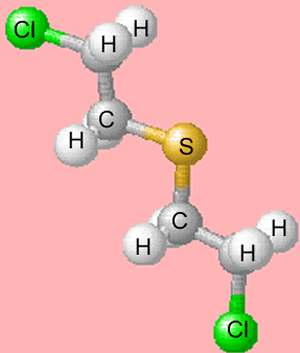
Mustard gas is another common chemical weapon that you may or has not have heard of but it typically used with the intent of causing harm or killing. The mustard agent was first used effectively in World War I by the German army against British and Canadian soldiers and later against the French Second Army. The use of these chemical weapons saw the development of military gas masks that would shield the toxic fumes from being breathed in by the soldiers. Later at the Chemical Weapons Convention of 1993, mustard gas could no longer by used in warfare or developed, produced, stockpiled, and sold. However, it is sometimes still used for domestic purposes by rogue governments in order to police its citizens or stunt a revolt against the government as seen recently in Syria. If you were exposed to mustard gas you could experience irritation, redness, burning, inflammation, and even blindness of the eyes, itchy redness that is replaced with yellow blisters on the skin, runny or bloody nose, sneezing, hoarse throat, shortness of breath, coughing, and sinus pain of the respiratory system, or abdominal pain, diarrhea, fever, nausea, and vomiting of the digestive system. Depending on the level of contamination, mustard agent burns can vary between first and second-degree burns, though they can also be every bit as severe, disfiguring, and dangerous as third-degree burns. Sulfur mustard is the scientific name for “mustard gas” and is an organic compound with the formula (ClCH2CH2)2S. Mustard gas is synthesized by reacting sulfur dichloride with ethylene (SCl2 + 2 C2H4 → (ClCH2CH2)2S). As of now, there are no antidotes for exposure to mustard gas but there are methods of decontamination such as the rinsing of the eyes with water or saline and the washing of the skin with soapy water. Even though mustard gas is banned by the global Chemical Weapons Convention, other countries still develop and use mustard gas as a weapon.

Sources:

Mass Spectrometry


Mass Spectrometry


Mass Spectrometry is used to determine the relative abundances of isotopes in nature. Mass spectrometry ionizes atoms and molecules with high beam of energy and then passes the ions through a magnetic field based on the mass to charge ratio of the ion. The mass spectrum of a sample shows the relative abundance of each ion.

In a mass spetrometer, a sample of atoms or molecules in inserted into the instrument. The sample is usually in an aqeuous or organic solution and is immediately vaporized by a heater in the device. The vaporized sample is then hit by high-energy electrons which are strong enough to knock electrons off atoms in the sample. This creates cationic versions of the sample that are accelerated through the magnetic field.

Once the ions enter the magnetic field, they are deflected into different amounts based on their charge and speed. The heavier ions that move more slowly are deflected less and the lighter ions that more more quickly are deflected more. The higher the charge of the ion, the more likely it will be deflected. The mass to charge ratio of the ions is inversely proportional to the mount that the ions are deflected. The detector records values and amounts for each ion; the relative abundance for a specific type of ion within the sample can be determined by dividing the number of ions of that type by the total number of ions detected. The mass spectrometer then creates a mass spectrum for the sample which marks the relative abundance of the ion against the mass-to-charge ratio of the ion.
A form of mass spectrometry has been used since the 1970’s to improve the accuracy of radiocarbon dating for archaeologists. Accelerator mass spectrometry accelerates ions to high speeds before analyzing their mass and counts individual Carbon-14 atoms. This allows smaller objects to be dated accurately. Mass spectrometry can also be used by the FDA to determine the amount of pesticides in food and limit the amount of pesticides that enter the food supply.


Works Cited:
http://www.iop.org/resources/topic/archive/archeology/
https://www.khanacademy.org/science/chemistry/atomic-structure-and-properties/mass-spectrometry/a/isotopes-and-mass-spectrometry
https://phys.org/news/2010-02-mass-spectrometry.html
https://www.youtube.com/watch?v=tOGM2gOHKPc

Recombinant DNA Technology [Biochemistry]

Because All organisms on Earth evolved from a common ancestor, so all organisms has a similar molecule of heredity - DNA. DNA has a double helix structure and contains a combination of the nitrogen bases: Adenine, guanine, cytosine and thymine. Although all the organism contain the same four bases, but there can be infinite number of ways to arrange them, so that each organism has a unique combination for their DNA strands. Due to the DNA structure of different organism having the same structure and bases, DNA can be “cut and past” which lead to recombinant DNA technology. Recombinant DNA Technology join the different strand of DNA, usually from two different species, and insert them into a host organism to produce new genetic combinations. The technology is beneficial to the understanding of DNA and the study of genetic engineering.
The first recombinant DNA molecule was produced in 1972 by Stanford researcher Paul Berg. Berg joined together DNA fragments from two different viruses with the help of restriction enzymes and ligase. Restriction enzymes are like “molecular scissors” that cut DNA at specific sequences. If the DNA from the different sources is cut with the same restriction enzyme, the cut ends can be joined together and then sealed into a continuous DNA strand by the enzyme ligase. In 1973, the first organism to contain recombinant DNA was engineered by Herb Boyer and Stanley Cohen. Together they introduced an antibiotic resistance gene into E.coli bacteria. Notably, they also produced bacteria that contained genes from the toad Xenopus laevis , which showed DNA from very different species could be spliced together. Paul Berg was awarded the 1980 Nobel Prize in Chemistry “for his fundamental studies of the biochemistry of nucleic acids, with particular regard to recombinant-DNA”.


The process of recombinant DNA technology: Step 1, Choosing the appropriate host organism and cloning vector. Step 2, Preparation of vector DNA and DNA to be cloned. Step 3, Creation of recombinant DNA. Step 4, Introduction of rDNA to host organism. Step 5, Screening for rDNA with specific properties sought from host organisms. Step 6, multiply or express the gene of interest.  
Now recombinant DNA technology is used in research laboratories worldwide to explore myriad questions about gene structure, expression pattern, regulation, function and much more. One of the widely used application is genetically engineer an animal to contain a particular gene of interest that is nonfunctional. The purpose of such experiments is to determine the function of the gene by analyzing the consequences of the missing gene. Another success in recombinant DNA techniques is the generation of genetically engineered plants to produce an insect toxin called Bt toxin. The toxin is derived from a bacterium called Bacillus thuringiensis that produces a toxin that disrupts gut function in the larvae of certain insects that eat crops. The gene of the toxin is introduced into plants by recombinant DNA technology, and it resulted in the killing of crop-feeding insects. It reduced the amount of pesticides used per year and has increased the longevity and success of several crops, it also has a major economic impact.

Biochemistry in Dentistry

Biochemistry is the study of the chemical processes and complex molecular relations that exist within living organisms. This branch of chemistry includes the study of essential elements and their necessity to living organisms, energy transformations that may occur within organisms, and molecules or ions and their orientation. Biochemistry plays a very large and important role in many procedures related to dentistry. Dentists use their information about biochemistry to understand chemical processes that occur within the mouth, to properly perform fillings, tooth extractions, oral surgery, and teeth whitening and to safely administer drugs or antibiotics to patients that may be in need of treatment. Through the study and use of biochemistry, dental researchers have had the opportunity to create new, advanced technology such as tissue engineering, and nanoparticles in dental implants! As well as this, dentists also use biocompatible materials to ensure the safety of their patients and their mouths. Some important topics in dentistry that relate to biochemistry include the chemical makeup and structure of teeth, enzymes and the important role they play in the mouth, and the formation of plaque on teeth.


The Chemical Makeup and Structure of Teeth:
Teeth are made of up of four main parts including the enamel, dentin, pulp, and the cementum. The enamel is the outermost part of the tooth made up of calcium phosphate. The dentin can be found underneath the enamel, and accounts for most of the tooth’s composition. The pulp is made up of soft tissue that contains blood vessels and nerves. Lastly, the cementum is a tissue that connects the tooth to the jawbone and gum line.


  • The enamel works to protect your tooth from decay, and the chemical structure of it allows it to do so.
  • 96% of the enamel is inorganic which means it contains very small amounts of carbon and most of the enamel is made up of hydroxyapatite lattice structure: Ca10(PO4)6OH2

  • This lattice structure provides extra strength and durability to the enamel, which is important when eating harder foods.
  • The high pH of the enamel also protects teeth from dissolving or being harmed by acidic/basic foods


Enzymes:

Enzymes play a very important role in the chemical processes that occur within a mouth. Two important functions of enzymes include the breaking down of nutrients, their role in the digestive process, their ability to protect a person from bacteria, and their ability to act as a buffer and maintain the pH of the mouth. The four main types of enzymes that are found in saliva include salivary amylase, lysozyme secretion, lingual lipase, and salivary kvllikrein.


  • Enzymes are also known as enzymatic proteins that cause the catalysis of chemical reactions.
  • Enzymes speed up a reaction by lowering the activation energy of a reaction


The Formation of Plaque on Teeth:

  • Plaque is formed on teeth by the buildup of food particles, saliva, and bacteria on teeth.
  • The acids produced by foods and sugars can decay the enamel over time, ultimately creating cavities. The acids from the plaque will neutralize, and the tooth will demineralize.

  • The formation of plaque can be prevented by frequently brushing teeth with fluoride and flossing.
  • Fluoride protects the teeth from forming cavities by supplementing the tooth and helping it to remineralize.


Works Cited:
  • http://www.scielo.br/scielo.php?script=sci_arttext&pid=S1516-14392003000300011
  • http://www.webmd.com/oral-health/picture-of-the-teeth#1
  • http://sciencing.com/names-enzymes-mouth-esophagus-17242.html
  • http://www.enchantedlearning.com/subjects/anatomy/teeth/toothanatomy.shtml
  • https://sites.google.com/a/bvsd.org/science-pal/biology/biochemistry/chemical-reactions


Nuclear- Nuclear Fusion Power

Nuclear Fusion Power is one of the newly possible eco-friendly way to produce huge amount carbon-free energy. This technology is not use by anyone yet to produce energy (electricity) because it is still in the research process. Joint European Torus which is the world's largest tokamak have proof that nuclear fusion is a possible way to generate clean energy but they have not discover an appropriate way to produce these energy in an industrial scale and decrease the amount of energy required for the nuclear fusion to take place. As a result, this technology still remain as a mystery. 
If we are able to use Nuclear Fusion Power in the future we will no longer have to worry about energy shortage because this technology produce energy more efficient than fossil fuel. Currently, this technology is considered to be the most efficient at producing energy because with one kilogram of fusion fuel it can produce the same amount of energy generated from 10 million kilogram of fossil fuel. The next advantage of Nuclear Fusion Power is that the only byproduct produce from this technology is a small amount of helium, which is an inert gas that have nothing to do with atmospheric pollution. The third advantage of this technology is that it only use tritium and deuterium, which is an abundant resource that are available on earth. Deuterium can be extracted from seawater, while Tritium can be produced from lithium that is found in the earth’s crust. The last advantage is that this technology would not leave a long-life radioactive waste behind because it can be safely recycle and will dispose within 100 years.
Watch the video below if you want to find out more about Nuclear Fusion Power research in different countries:

The way the Nuclear fusion power work actually follow the fusion concept in nuclear chemistry. Fusion is when the nuclei combine together to become more stable and this result in an increase in the mass of the atoms. Similarly, in the Nuclear fusion power the goal is to combine the deuterium and tritium to produce helium. Deuterium is a stable atomic species that is an isotope of hydrogen, which contain a proton and a neutron. Tritium is is a not stable atomic species that is also an isotope of hydrogen, which have one proton and two neutrons. To achieve a high fusion reaction rate the two hydrogens species (fuels) must be heated to a temperature that is over 100 million degrees celsius and this will cause the fuels to change from a gas state into a plasma state. Plasma is a state of matter where the particles that make up the atom lose most of it electrons because of its high-temperature, in the context of nuclear chemistry plasma is a very hot mixture of electrons and positive nuclei. This is why the negatively-charged electron separated from the positively-charge atomic nuclei when the fuel is heated. This result in a plasma that is a million times less dense than air. The plasma are extremely hot so it can not come in contact with any type of materials. As a result, scientists is still working to find the best way to confined these plasma, some of the possible ways that is found so far include Tokamak and Stellarator. Magnetic confinement used Tokamak, which confined the plasma by creating a strong magnetic fields. Figure 1 is a Tokamak, from this figure it show that Tokamak use multiple magnets one of it is located in the middle while the rest is wrap around the plasma like a coil and also around the top and bottom in order to control the position and shape of the plasma. Stellarator also use magnetic field to confined the plasma but the location that the magnet are place is different. Figure 2 show that the magnet that Stellarator place around the plasma are like a twisted coil, the purpose of the twist is to control the direction of the plasma so it will remain inside the chamber.
Figure 1. Tokamak

Figure 2. S Stellarator 
Normally, it is not possible for fusion to occur because they are not close enough to each other to collide. This is because the positively charged nuclei have a strong repulsive electrostatic force that prevent them from getting close to each other. Electrostatic force is the force between particles causing by their electric charges. But this problem can be solve if apply more heat to increase the temperature because it will cause the nuclei to move faster and they will eventually reach a speed that allow them to overcome the electrostatic forces and shorter the range so they are closer to each other. This will allow nuclei to fuse because the attractive nuclear force will outweigh the electrostatic force and when they fuse a huge amount of energy will be release. As a result, when Deuterium fuse with Tritium the product that is produce is a free neutron and helium-4, which means that it contain two protons and two neutrons. Below is an equation that show the fusion process. The amount of energy release from this fusion is 17.6 MeV and it is in the form of kinetic energy. The amount of energy produce each time will vary depending on the amount of Deuterium and Tritium used but the formula that can be use to calculate the energy is the Mass–energy equivalence formula (E=mc^2).

In conclusion, Nuclear Fusion Power is very important because if the research is success and the technology is put into use in the future people will not have problem with energy shortage. Moreover, people will also be able to reserve the remain fossil fuel that have not been use to generate energy. Lastly, people will be able to reduce global warming and improve air quality because this technology does not produce any green house gas or poisonous gas that will affect people's health.


Thursday, May 4, 2017

Biochemistry in Taste

Taste: You and Your Buds

Taste is one of our five senses, also referred to as gestation. Smell and taste are so complex they require special neurons sensitive to chemical substances to facilitate the senses. Although we are born with the ability to taste, the sense develops as we age, therefore babies and young children tend to dislike strong flavors such as onions and mustard. Taste buds are nerve endings on the tongue that sense only four sensations: bitter, salty, sour, and sweet (some scientist also believe there to be a fifth sensation; umami - savory). Texture, temperature, smell, and combinations of these sensations allow us to detect differences in the foods we eat. Taste is so influenced by smell that it is very important to our sense of taste to inhale and exhale as we eat or drink. Also, the sense of taste can be hindered by things such as zinc deficiency, smoking, a head cold or sinus problems, deficient sense of smell, or damage to certain parts of the brain. My dad was involved in a car crash as a teenager in which he suffered a laceration across his nose and mouth, severing the nerves to his nose. His injury made him unable to smell for a long time and even now, his sense of smell is limited. He is able to smell today because the only cells in the nervous system to be replaced when old ones are damaged or die are the neurons associated with smell and taste. Since his recovery my dad has developed a taste for strong flavors such as vinegar, citrus, and peppers. Texture is also a big factor for my dad now, he explains, "because there is not a lot of nuance in my taste, I'm very focused on the textures of the food I eat". For example (and much to my dismay) he does not like avocados but chocolate is his favorite food. 

Image result for taste in the brainThe Wolrd of Biology states, "taste begins when food or drink mix with saliva in the mouth and stimulate taste buds on the surface of the tongue, soft palate, pharynx, larynx, and epiglottis". I remember growing up believing the falsehood that specific areas of the tongue were designated for specific tastes. For instance, the taste buds receptive to sweetness were supposedly at the front, along the front sides were the taste buds receptive to salt, those further back were for sour flavors, and bitterness was detected by the far back taste buds. In 1901, D.P. Hanig, a German scientist, published the first "tongue map". Then in 1974 one of the first breakthroughs in taste research surfaced, and at this time scientists realized that the tongue map was a century old understanding that no one challenged. This breakthrough was realized by Virginia Collins. His research stated that individual taste buds are not even specifically sensitive to individual taste, instead "there are variations in sensitivity to the four basic tastes around the tongue" and he found that there are receptors that are sensitive to all tastes located around the tongue, on the soft palate, and in the epiglottis. These receptors have a neuronal response to combinations of bitterness, saltiness, sourness, and sweetness which are decoded in the brain, not in the mouth. Each one of us has 2,000-5,000 taste buds, which each contain 50-150 neuroepithelial cells. An action potential is initiated in these cells when a chemical stimulation occurs. These cells "interact through a complex system of electrical and synaptic responses with fibers within the central nervous system". Then these responses synapse to the medulla, the thalamus, and the postcentral gyrus.


Work Cited:
http://ic.galegroup.com/ic/scic/ReferenceDetailsPage/ReferenceDetailsWindow?disableHighlighting=&displayGroupName=Reference&currPage=&dviSelectedPage=&scanId=&query=&source=&prodId=&search_within_results=&p=SCIC&mode=view&catId=&u=dc_demo&limiter=&display-query=&displayGroups=&contentModules=&action=e&sortBy=&documentId=GALE%7CCV2431500598&windowstate=normal&activityType=&failOverType=&commentary=

http://www.livescience.com/7113-tongue-map-tasteless-myth-debunked.html